Editor’s Note:
This blog is transcreated based on a YouTube video by BULLI KID, titled “MaXpeedingRods G25 660 TURBO T25 0.49 AR vs Vband 0.72 AR.” In the video, BULLI KID compares two MaXpeedingRods dual ceramic ball bearing turbochargers with different turbine housing setups: the T25 0.49 A/R version and the V-band 0.72 A/R version. Check out the full video here: https://www.youtube.com/watch?v=VOTjXqagJCM
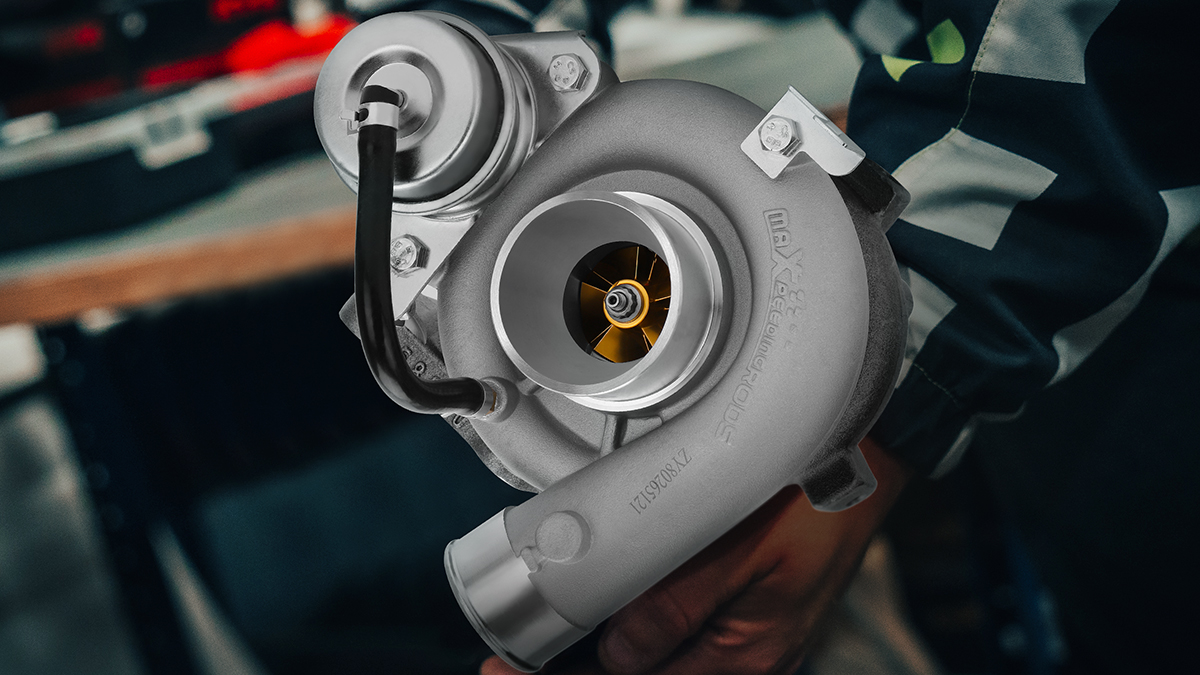
In this video, BULLI KID takes a closer look at two MaXpeedingRods 660HP turbochargers and explains how two turbos that look almost identical can perform very differently once you start looking at the turbine housing, flange style, and A/R size.
Both turbos are part of MaXpeedingRods’ newer dual ceramic ball bearing turbo lineup. They are internally wastegated, which was one of the key features BULLI KID was looking for in a future project build. An internally wastegated turbo can help keep the setup simpler, especially for lower-boost or street-focused applications, because it does not require a separate external wastegate setup on the manifold.
From the compressor side, the two turbochargers are very similar. Both use a 0.70 A/R compressor housing, a forged aluminum compressor wheel, and an anti-surge housing. BULLI KID also points out that both turbos come balanced and include a tapped boost reference port for the wastegate, making them more ready for a project setup right out of the box.
The real difference comes from the turbine side.
The first version is the V-band 0.72 A/R turbo. This model uses a 3-inch V-band style inlet and a larger 0.72 A/R turbine housing. According to BULLI KID, this setup is better suited for drivers who want more top-end power, smoother boost delivery, and stronger performance higher in the RPM range. It may take a little longer to spool compared with the smaller housing, but it gives the turbo more room to flow as power increases.
That makes the V-band 0.72 A/R version a good choice for drag-style builds, highway pulls, built engines, or cars that spend more time near redline. BULLI KID also notes that the smoother boost curve can be easier on a stock block compared with a smaller turbo that brings torque in too quickly at low RPM.
The second version is the T25 0.49 A/R turbo. At first, it may look like the same turbo with a different flange, but the turbine housing is actually smaller. The 0.49 A/R housing helps the turbo spool faster, which can make the car feel more responsive in the low-to-mid RPM range.
This version is especially interesting for street cars, smaller displacement engines, and builds where quick response matters more than maximum top-end horsepower. The T25 flange is also common on many compact turbo platforms, including Honda, Acura, Miata, and similar project cars, so it may be easier to match with existing manifold options.
However, BULLI KID also explains the trade-off. While the T25 0.49 A/R version can deliver faster spool, the smaller turbine housing may become a restriction at higher power levels. In other words, it can feel great for a responsive street setup, but it may not have the same top-end flow potential as the larger V-band 0.72 A/R version.
Both MaXpeedingRods turbos also share several useful design features. They are oil- and water-cooled, include a ball bearing center cartridge, and come with an oil restrictor, which is important because ball bearing turbos do not need as much oil flow as traditional journal bearing turbos. The one-piece style turbine housing and internal wastegate layout also help reduce extra clamps and simplify the overall design.
So, which one should you choose?
If you want a quicker spool, stronger low-to-midrange response, and easier compatibility with common turbo manifolds, the T25 0.49 A/R turbo is the more street-friendly choice.
If your build is focused on higher RPM power, smoother boost delivery, and more room to grow, the V-band 0.72 A/R turbo is the better fit.
Overall, this comparison shows why turbo selection is not just about horsepower ratings. Both MaXpeedingRods turbos may share a similar footprint, but they are designed for different driving goals. For a responsive street build, the T25 version makes sense. For stronger top-end performance and future upgrades, the V-band version gives you more room to push the setup further.