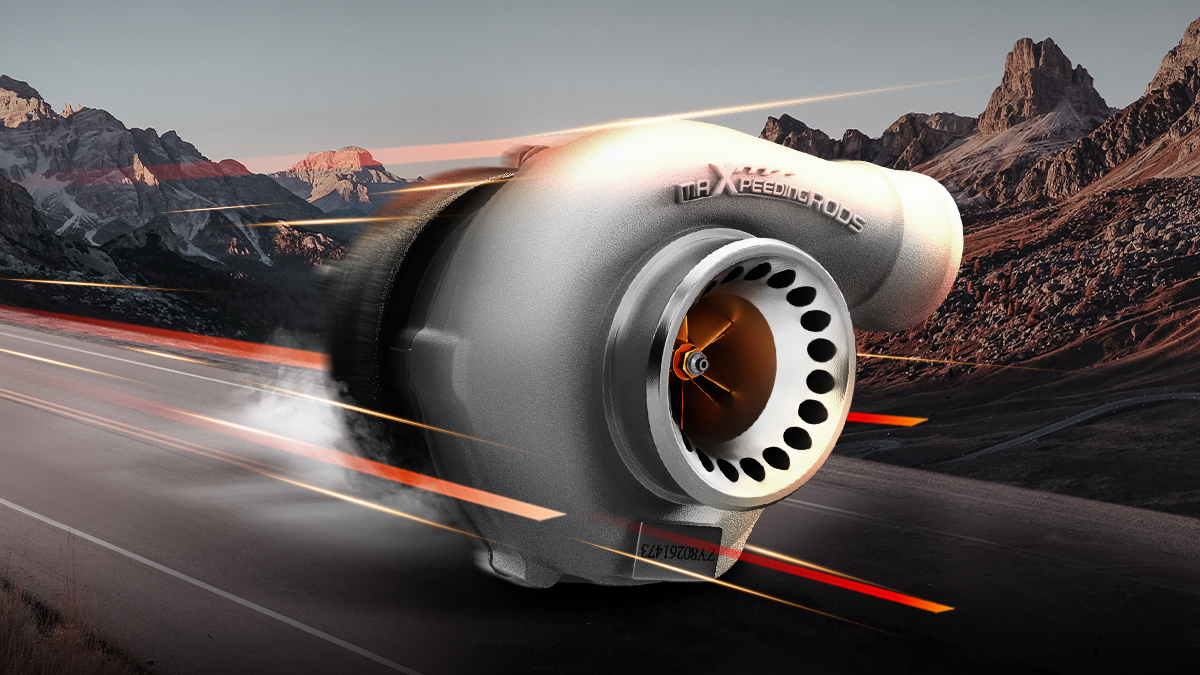
Editor’s Note: Turbocharging a naturally aspirated Honda platform involves far more than simply adding boost. Packaging, oil routing, intercooler placement, and engine bay clearance all play a major role in how a setup ultimately performs. In this project, Isaac Jetter documents the installation of a MaXpeedingRods turbo kit for a D17 Honda Civic platform, focusing on the fitment process, supporting modifications, and real-world fabrication considerations involved in building a budget-oriented street turbo setup. Check out the full video for the complete install and driving review.
Supporting Modifications Before the Turbo Installation
Before beginning the turbo setup, the Civic had already received several supporting upgrades intended to improve airflow, chassis stability, and overall drivability.
The existing setup included:
- DNA Motoring headers
- Cold air intake system
- Coilover suspension setup
- Cat-back exhaust system
The vehicle itself had also recently been refinished in British Racing Green, giving the Civic a much more aggressive street-build appearance.
While several of the previous bolt-on modifications improved the naturally aspirated setup, the turbo installation required replacing some existing components entirely—particularly the intake system, which would be removed in favor of intercooler piping.
Beginning the Turbo Installation Process
The installation started with removing the existing intake system and aftermarket headers to prepare the engine bay for the turbo manifold and turbocharger assembly.
During disassembly, several common issues appeared:
- Tight engine bay clearance
- Limited access to lower exhaust hardware
- Difficult spring-mounted exhaust fasteners
- Oxygen sensor removal challenges
Rather than being a simple bolt-on procedure, the installation quickly became a combination of mechanical work, test fitting, and fabrication planning.
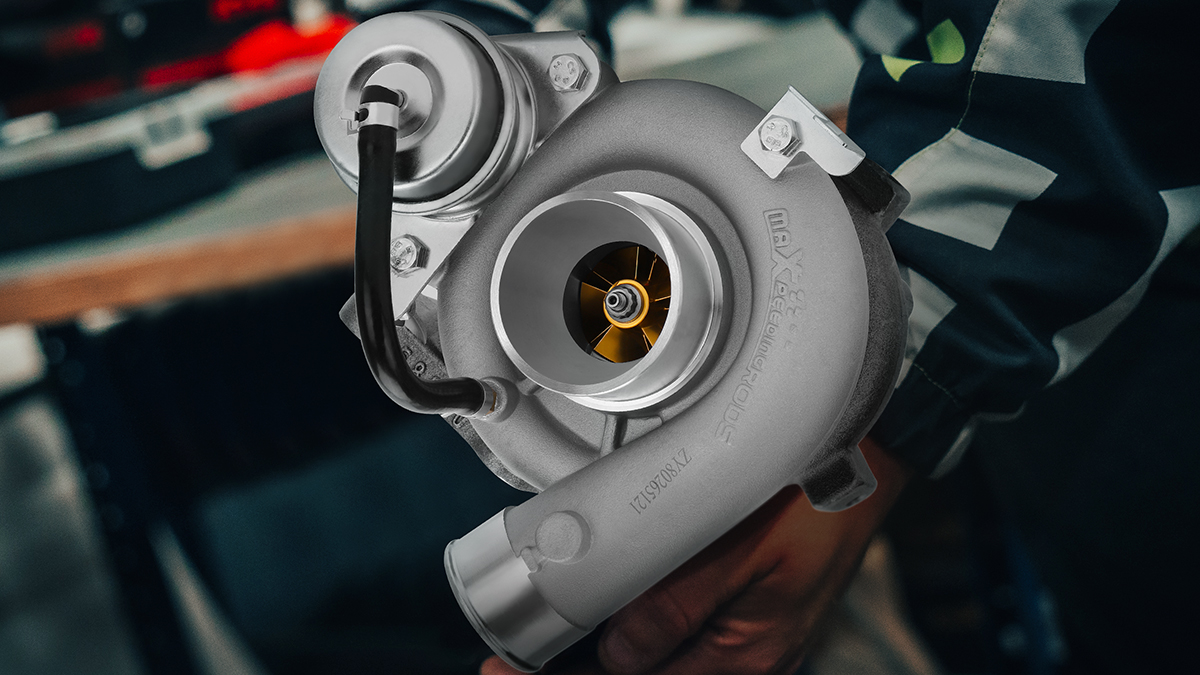
After removing the existing headers, the new turbo manifold from the MaXpeedingRods kit was unpacked and test-fitted alongside the turbocharger.
The kit itself included:
- Turbocharger
- Turbo manifold
- Gaskets
- Hardware
- Oil fittings
- Intercooler piping
- Blow-off valve
- Boost gauge
The complete package allowed most major turbo components to be installed directly from the kit without sourcing additional core hardware separately.
Turbo Clocking and Engine Bay Clearance
One of the most time-consuming parts of the installation involved properly clocking the turbocharger.
Because of the limited engine bay space on the D17 Civic platform, the turbocharger orientation had to be repeatedly adjusted to achieve acceptable clearance between surrounding components.
During mock-up testing, several fitment considerations became immediately apparent:
- Radiator fan clearance was extremely limited
- Refrigerant lines restricted turbo placement
- Air filter routing space was minimal
- Intercooler piping angles required modification
To improve clearance, the radiator fans were temporarily removed, and slimmer aftermarket fans were planned for the final setup.
The turbocharger orientation was also revised multiple times before achieving a workable position that allowed the compressor housing, oil lines, and intake routing to coexist within the compact engine bay.
The process highlighted a common reality with budget turbo builds: even complete turbo kits often require additional adjustment and fabrication depending on chassis layout and engine configuration.
Oil System Preparation and Return Line Fabrication
Proper oil routing is one of the most important parts of any turbocharger installation.
To support the turbo oil return system, the oil pan was removed and modified to accept a threaded return fitting.
The process included:
- Draining engine oil
- Removing the oil pan
- Cleaning gasket surfaces
- Measuring return-line routing
- Drilling and preparing the oil return fitting location
Because the return fitting location needed to align correctly with the turbocharger drain line, repeated measurements and mock-up positioning were necessary before drilling the oil pan.
The installation also reinforced the importance of sealing surfaces and gasket preparation, especially on older Honda engines where oil leaks can quickly become a problem after forced-induction conversions.
Intercooler Routing and Piping Adjustments
Once the turbocharger position was finalized, attention shifted toward intercooler and charge-pipe routing.
The front-mounted intercooler was test-fitted while piping routes were planned from the throttle body to the compressor outlet.
As with many custom turbo setups, the universal piping included in the kit still required modification to suit the Civic chassis properly.
Several sections required trimming and repositioning to improve:
- Wheel clearance
- Coupler alignment
- Pipe routing angles
- Overall fitment
The blow-off valve assembly was also installed during the mock-up process, although final tightening and clamp positioning were intentionally left unfinished until all piping alignment was confirmed.
The installation process emphasized how intercooler routing often becomes one of the most fabrication-intensive parts of turbocharging front-wheel-drive Honda platforms.
Real-World Challenges of a First-Time Turbo Build
Throughout the project, the installation process remained heavily focused on problem-solving and fitment refinement rather than simple part replacement.
Unlike standard bolt-on modifications, turbocharging the Civic introduced several areas requiring:
- Custom positioning
- Clearance adjustments
- Additional fabrication
- Supporting cooling modifications
- Repeated mock-up testing
The D17 platform itself also presented unique packaging limitations compared to more commonly turbocharged Honda engine setups.
As a result, much of the installation process involved adapting the turbo system around the chassis rather than following a fixed installation formula.
The MaXpeedingRods turbo kit provided a complete starting point for building a budget turbocharged Honda Civic project.
While the installation required additional fabrication work, repeated fitment adjustments, and supporting modifications, the project demonstrated the flexibility of the kit for custom Honda turbo applications.
The build also highlighted an important aspect of real-world turbocharging projects: successful forced-induction setups often depend just as much on planning, fitment, and supporting hardware as they do on the turbocharger itself.
For enthusiasts building budget-oriented Honda projects, the installation process offered valuable insight into the realities of turbo system packaging, intercooler routing, and engine bay optimization on compact front-wheel-drive platforms.